

What people draw from memory, measured.
Sketch maps can be considered externalizations of cognitive mental maps. SketchMapia compares them against a map of the real environment, so that studying them no longer means scoring every drawing by hand.
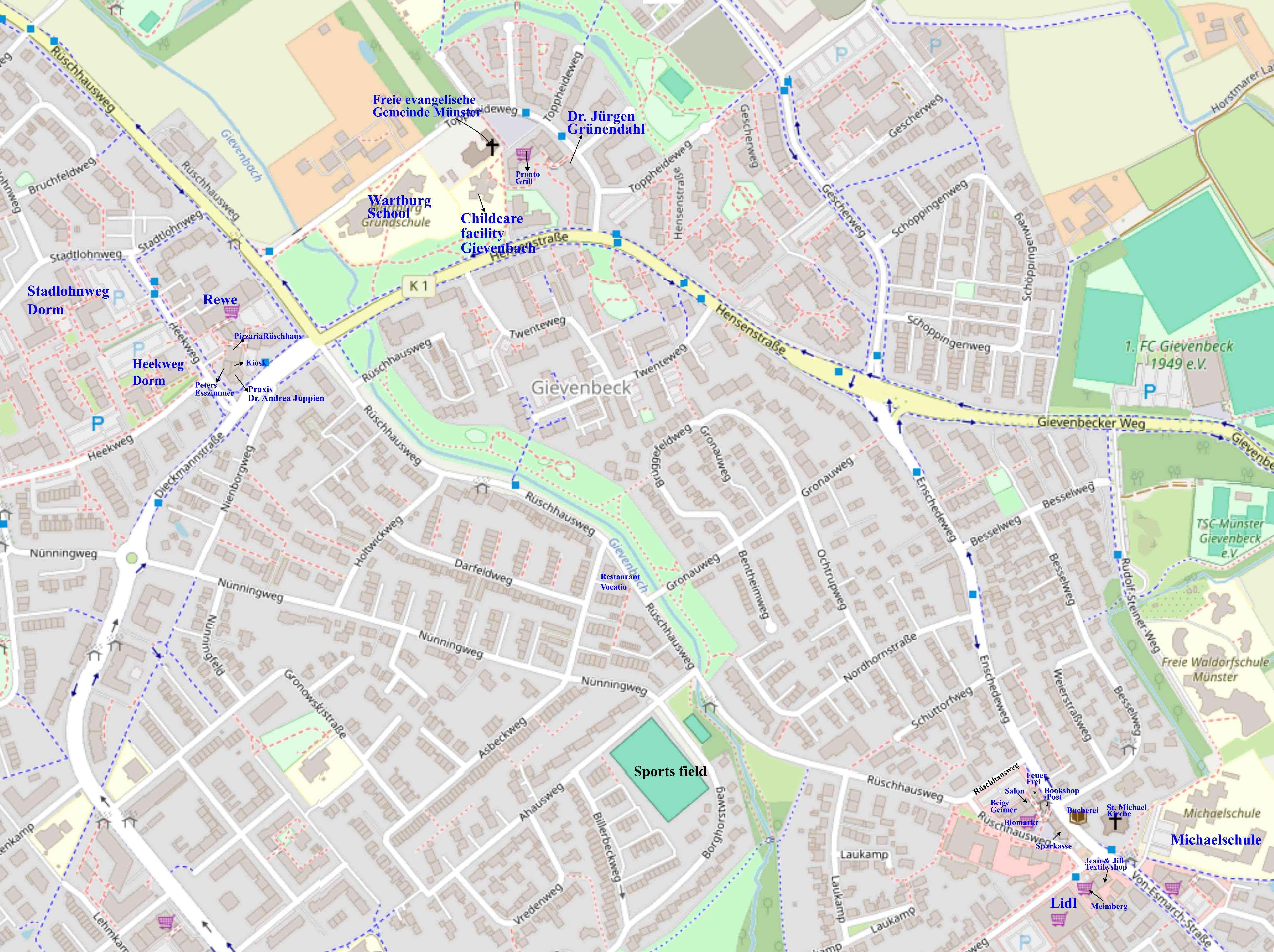
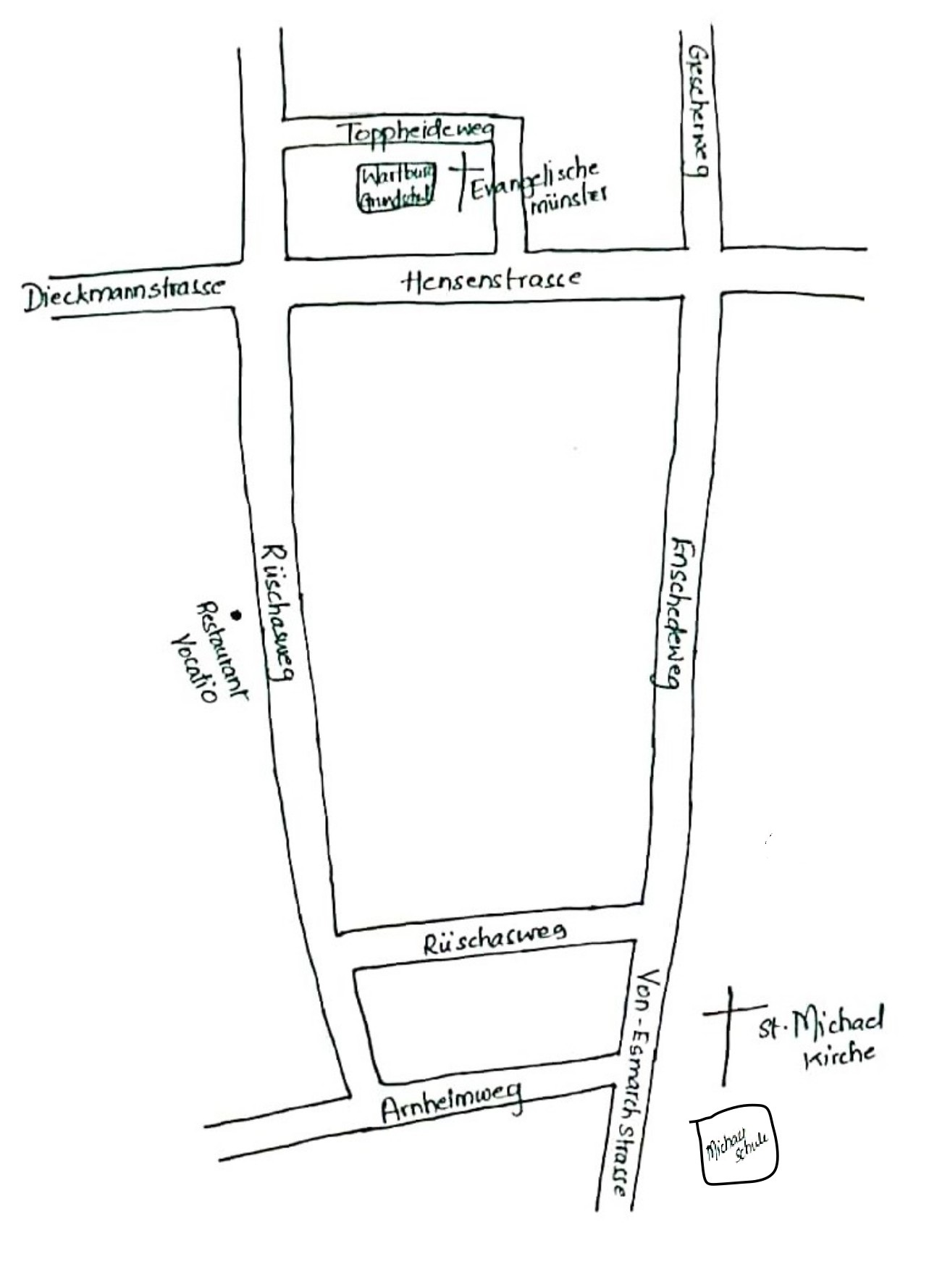 the same place, twice
Researchers have long sought to systematically study how people perceive and understand space. Analysing sketch maps, though, has stayed a slow and largely manual process. SketchMapia is a method for doing it systematically, for use in the social and natural sciences.
The software helps an experimenter to analyse:
Of everything in the real environment, what appears in the drawing at all.
How far they abstracted: a row of shops drawn as one block, a junction simplified, a whole area reduced to a single labelled shape.
Given what they drew, whether it was arranged correctly.
These sketch maps of Gievenbeck in Münster were drawn from memory by two participants. Both kept Hensenstraße running east to west, both placed Rüschhausweg and Enschedeweg either side of the block between them, and both remembered the Wartburg Grundschule and St. Michael Kirche. Beyond that they diverge: one recalls shops, dormitories and side streets the other leaves out entirely.
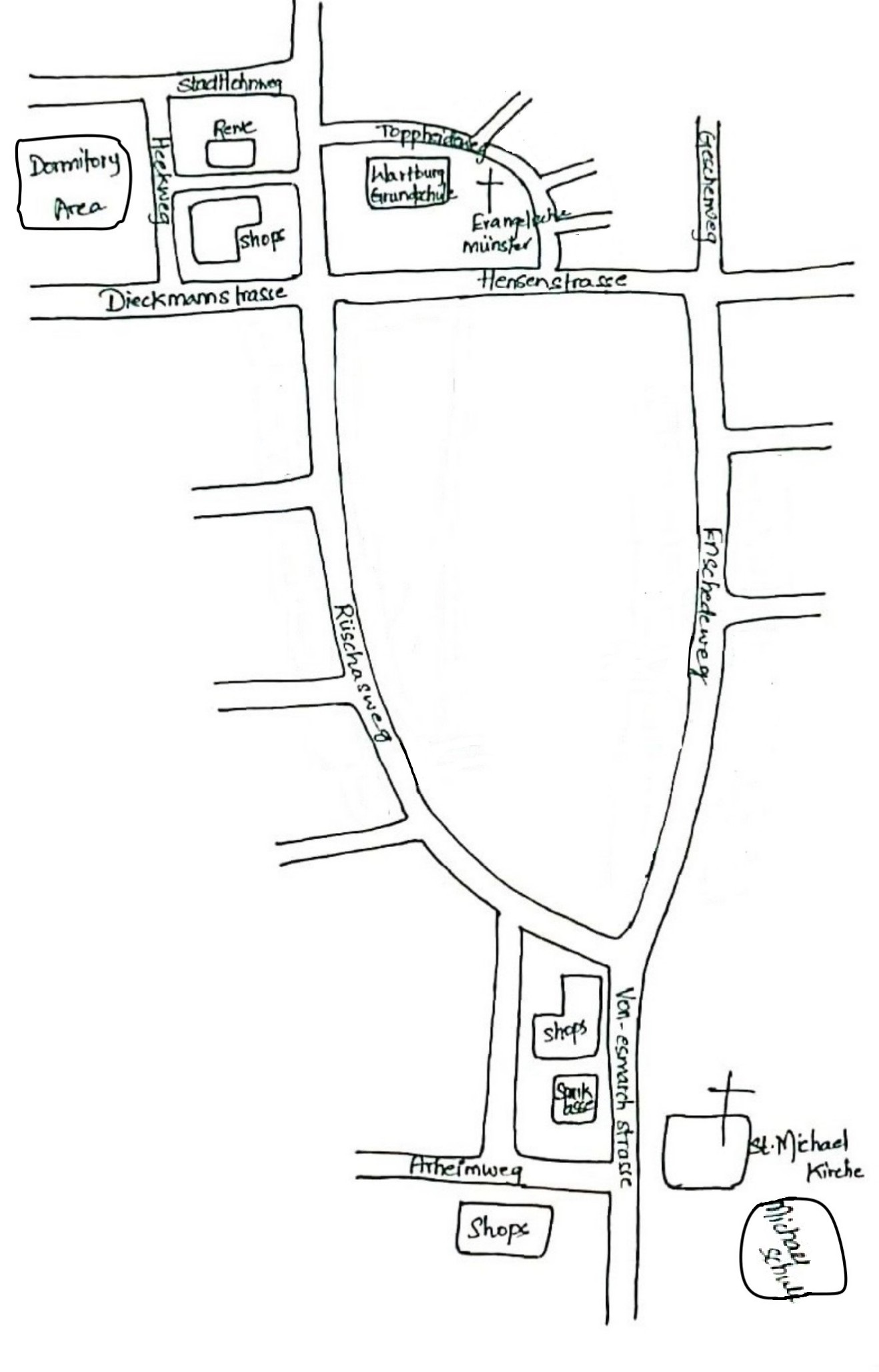
A participant who draws four adjacent buildings as one block has not forgotten three of them. They have abstracted, and that is worth measuring in its own right rather than counting as a mistake.
So before any accuracy measure runs, SketchMapia applies the participant's own simplifications to the reference map. If they merged four buildings, those four are merged on the reference side too, and the comparison is made like for like. The kinds of simplification people make are themselves recorded, which is how generalisation becomes something you can study rather than something you have to correct for.
This video gives a short overview of SketchMapia and how to use it.
For key concepts, how to set up a study, and what each measure means, see the documentation. Source code and technical notes are on GitHub.